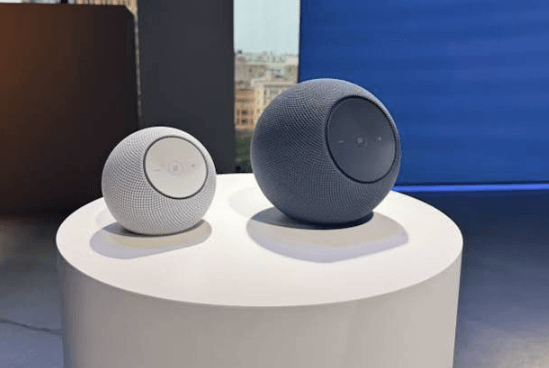
Artificial intelligence in smart speakers integrates speech recognition, natural language understanding, and real-time decision making to enable voice-driven tasks. On-device learning supports fast, offline responsiveness, while cloud AI handles heavy inference and broader context. Multimodal control and privacy-preserving personalization shape user trust, with data governance guiding telemetry and defaults. Ambient orchestration across rooms and devices aims to optimize productivity and energy use. The practical boundaries and governance left to be explored invite closer scrutiny of system design choices.
How AI Powers Smart Speaker Capabilities
Smart speakers integrate AI to deliver responsive, context-aware interactions by combining speech recognition, natural language understanding, and real-time decision making. The system leverages on device learning and Cloud AI for scalable inference, supporting voice interfaces and multimodal control. Contextual understanding enables seamless task execution, while personalization privacy considerations govern data handling, ensuring robust privacy protections without compromising practical functionality for freedom-oriented users.
Personalization and Privacy: Balancing Convenience With Safeguards
Personalization and privacy present a design trade-off that must be managed at system level: tailoring responses enhances usability, while safeguards protect user data and trust.
Implementations emphasize modular privacy safeguards and explicit consent management, enabling context-aware personalization without overreach.
System architects balance data minimization, transparent telemetry, and configurable defaults, ensuring scalable personalization while preserving user autonomy and regulatory alignment across diverse deployment environments.
Voice Assistant Interfaces: NLP, On-device Learning, and Cloud AI
How do Voice Assistant Interfaces balance natural language processing, on-device learning, and cloud-based AI to deliver accurate, responsive interactions while safeguarding privacy and performance?
The discussion outlines a system-level approach: speech recognition pipelines optimized for latency; on-device models for quick intents and offline reliability; and cloud deployment for heavy inference, learning, and contextual understanding, with strict data governance and privacy controls.
Use Cases That Move the Needle: Everyday Productivity and Smart Homes
To what extent do everyday productivity and smart-home scenarios drive measurable improvements in efficiency, reliability, and user trust when orchestrated through voice interfaces? The discussion centers on ambient intelligence and multiroom orchestration, detailing system-level integrations across devices, routines, and contexts. It emphasizes latency, fault tolerance, privacy, and observable gains in task completion, energy management, and workflow continuity for freedom-seeking users.
Frequently Asked Questions
How Do Smart Speakers Handle Cross-Device Voice Collaboration?
Smart speakers enable cross device collaboration via synchronized voice data streams and distributed state management; devices coordinate through cloud-based sessions, propagate commands, and maintain consistent contexts. Voice data synchronization ensures seamless handoffs and conflict resolution across participants and environments.
What Standards Exist for Third-Party App Security?
Standards for third-party app security emphasize ongoing security audits and strict data minimization. A system-level approach requires threat modeling, code reviews, and access controls, enabling developers and users to pursue secure integration with transparency and freedom to choose.
Can Speakers Misinterpret Accents and Dialects Reliably?
On balance, speakers can misinterpret accents and dialects, but with robust models and continual adaptation, accent accuracy improves and dialect adaptation broadens coverage; however, edge cases persist, requiring fallback strategies and ongoing performance monitoring for reliability.
How Is Data Encrypted During Cloud Processing?
Data encryption during cloud processing employs transport and at-rest protections, TLS-ECDHE for in-flight secrecy, and robust key management with rotation. Pseudonymization and envelope encryption support scalable, auditable, user-respecting architectures that emphasize autonomy and practical system security.
See also: What Is Due Diligence in Cryptocurrency?
Do Speakers Learn From Conversations With Other Devices?
Yes, speakers do not ordinarily share raw conversations; they may enable limited cross-device learning under policy. Dual learning capabilities exist, but cross device privacy depends on platform controls, encryption, and opt-in safeguards, preserving user autonomy and data minimization.
Conclusion
Smart speakers integrate on-device learning with cloud-scale inference to deliver responsive, context-aware actions while safeguarding privacy. A system-level view reveals ambient orchestration across rooms and devices, enabling seamless routines and energy-aware automation. An illustrative statistic: surveys show that 68% of users prefer devices with transparent privacy controls, correlating with longer engagement and adoption of smarter routines. The architecture hinges on modular components—speech recognition, NLU, decision engines, and secure telemetry—meeting practical reliability and governance requirements without compromising user trust.