Understanding the Importance of Plastic Resin Drying
Plastic manufacturing requires precise control over material properties, processing temperatures, and production conditions. Before plastic resin pellets are processed through injection moulding, extrusion, or other manufacturing methods, their moisture content must be suitable for the intended application. Excess moisture can affect material consistency, surface appearance, mechanical strength, and the reliability of finished components.
Many engineering plastics absorb moisture from the surrounding environment during storage, transportation, and handling. Hygroscopic materials can retain moisture within the pellets, making surface heating alone insufficient for effective drying. If these materials are processed without adequate moisture removal, manufacturers may experience defects, material degradation, and inconsistent production results.
A suitable plastics dryer helps maintain the required drying conditions before resin enters the processing machine. The selection of drying technology should consider the polymer type, initial moisture content, required final moisture level, processing temperature, and production throughput. By managing these factors, manufacturers can improve process consistency and support more reliable product quality.
Why Is Moisture Control Important in Plastic Processing?
Preventing Surface Defects
Excess moisture in plastic resin can contribute to visible defects during processing. Depending on the material and operating conditions, these may include silver streaking, splay marks, bubbles, voids, and irregular surface finishes.
Such defects can affect the appearance and dimensional quality of moulded components. Products with strict cosmetic or functional requirements may require additional inspection or rejection when defects exceed acceptable limits.
Effective drying reduces moisture-related risks before the material enters the processing stage. However, drying is only one part of quality control. Processing temperature, screw design, mould conditions, material contamination, and machine settings must also be evaluated when diagnosing defects.
Protecting Mechanical Properties
Moisture can affect certain polymers through hydrolysis during melt processing. This chemical reaction can reduce polymer molecular weight and compromise important mechanical properties.
Depending on the resin, inadequate drying may contribute to reduced tensile strength, impact resistance, elongation, and overall structural performance. These concerns are particularly important when processing moisture-sensitive engineering plastics such as polyamide, polycarbonate, and polyester-based materials.
Following resin manufacturers’ recommended drying specifications helps reduce the risk of moisture-related degradation and supports more consistent material performance.
Improving Production Consistency
Inconsistent resin moisture levels can create variation between production batches. Manufacturers may experience changes in appearance, processing behaviour, reject rates, and the reliability of finished components.
A properly selected drying system helps establish repeatable conditions by controlling drying temperature, airflow, dew point, and material residence time. These factors allow production teams to manage the condition of resin more consistently before processing begins.
How Does a Desiccant Dryer Work?
Removing Moisture From Plastic Resin
Desiccant dryers use moisture-attracting materials to remove water vapour from process air. The resulting dry air passes through a hopper containing plastic resin, allowing moisture to migrate from the pellets into the air stream.
As the air circulates, it carries moisture away from the material. The drying process continues until the resin approaches the moisture level required for processing, provided that temperature, airflow, dew point, and residence time are correctly established.
The desiccant material is regenerated to remove the moisture it has collected, allowing the drying system to continue operating. This approach is particularly useful for hygroscopic polymers, where moisture may be absorbed inside the pellets rather than remaining only on the surface.
Understanding Dew Point
Dew point is a key indicator of air dryness in plastic resin processing. A lower dew point indicates that the air contains less water vapour, creating conditions that encourage moisture to leave the resin.
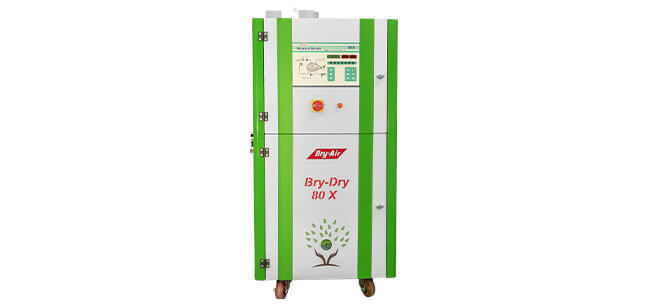
Many engineering plastics require very dry process air to reach their specified moisture content. Bry-Air’s Wonder Dryer product information states that the system can deliver a dew point below -40°C, including at return-air temperatures of up to 80°C at the desiccant rotor inlet, under the stated operating conditions.
The required dew point should always be determined according to the resin manufacturer’s recommendations and the production process. A suitable specification helps prevent under-drying while avoiding unnecessary energy consumption.
What Should Manufacturers Look for in a Plastic Drying System?
Compatibility With Different Resin Types
Different polymers have different moisture absorption characteristics and drying requirements. Materials such as PET, polycarbonate, polyamide, and PBT may require controlled dehumidification before processing, while some non-hygroscopic materials primarily require surface moisture removal.
Manufacturers should identify the exact resin grade and consult its technical data sheet before selecting drying equipment. Drying temperature and duration must match the material requirements because excessive heat or prolonged exposure can also affect resin quality.
The drying system should provide sufficient control to maintain the required conditions for the materials being processed.
Appropriate Capacity and Airflow
Dryer capacity must match the quantity of resin consumed by the production line. Equipment that is too small may fail to supply enough properly dried material, while an oversized system may increase capital and operating costs without providing a meaningful production benefit.
Airflow, hopper design, resin residence time, and the temperature profile throughout the material bed all influence drying performance. Engineers should consider the required production rate, the number of processing machines, and the characteristics of the resin when determining system capacity.
Bry-Air’s Wonder Dryer range is listed in capacities from 30 CMH to 3,500 CMH, allowing selection according to the requirements of the application.
Energy Efficiency and Waterless Operation
Energy consumption is an important consideration for plastic processors because drying equipment may operate throughout production shifts. A system that reduces unnecessary energy use can help lower operating costs while maintaining the required drying performance.
Bry-Air describes its Wonder Dryer as a waterless plastic drying solution that eliminates the need for a chiller or heat exchanger and associated pipelines in its specified configuration. The company also states that the product can reduce running costs by up to 40%. Actual savings depend on the existing equipment, operating conditions, energy prices, and production requirements.
When evaluating desiccant dryers for plastics, manufacturers should compare total operating costs, required maintenance, process performance, and installation needs rather than focusing only on initial purchase price.
How Can Proper Dryer Operation Reduce Manufacturing Waste?
Establishing Correct Drying Parameters
Reliable drying begins with the correct combination of temperature, dew point, airflow, and drying time. These parameters vary according to the resin grade, pellet size, initial moisture content, and required final moisture level.
Manufacturers should use the resin supplier’s technical recommendations as the starting point and verify the process through appropriate moisture measurements. Assumptions based only on drying temperature may be insufficient because heated air does not necessarily remove enough moisture from hygroscopic pellets.
Documented operating procedures help ensure that the correct settings are maintained when materials or production requirements change.
Monitoring Performance and Maintenance
Regular monitoring helps identify conditions that may affect drying performance. Dew-point readings, temperature measurements, airflow checks, filter inspections, and preventive maintenance can help operators identify problems before they lead to production defects.
Filters should be maintained according to equipment requirements to prevent restricted airflow and contamination. Sensors and control instruments should also be checked periodically to ensure that readings remain reliable.
Where material changes are frequent, appropriate hopper cleaning and handling procedures help reduce the risk of cross-contamination and inconsistent resin quality.
Measuring Quality Improvements
Manufacturers can evaluate drying performance through measurable production indicators. Relevant metrics include reject rates, material waste, surface defect frequency, unplanned downtime, energy consumption, and consistency between production batches.
Reviewing these indicators helps determine whether the drying system is meeting its intended objectives. It also supports informed decisions about equipment upgrades, process adjustments, and maintenance schedules.
Why Choose an Application-Specific Drying Solution?
A plastic drying system should be selected according to the manufacturing process rather than through a one-size-fits-all approach. Resin properties, moisture sensitivity, production volume, available floor space, energy requirements, and integration with existing machinery all influence the most suitable configuration.
Bry-Air offers industrial moisture-control technologies, including the Wonder Dryer for plastic resin drying. Its product information highlights waterless operation, energy efficiency, and the ability to achieve low dew points for demanding plastic processing requirements.
Before making a selection, manufacturers should confirm the required resin throughput, target moisture content, drying temperature, available utilities, and expected operating schedule. Consulting technical specialists can help establish whether the proposed equipment is suitable for the intended application and production environment.
Conclusion
Choosing the right plastics dryer is an important step toward maintaining product quality, improving processing consistency, and reducing moisture-related manufacturing waste. Effective resin drying helps limit surface defects, protects the properties of moisture-sensitive polymers, and supports reliable production across different processing applications.
The best solution depends on the resin type, required dew point, drying temperature, airflow, residence time, and production capacity. Manufacturers should also consider energy efficiency, maintenance requirements, process monitoring, and integration with existing equipment when evaluating available technologies.
A carefully selected and properly maintained drying system can support more predictable manufacturing outcomes while helping control operating costs. To discuss resin drying requirements and identify a suitable solution for your production process, visit Bry-Air’s Contact Us page.