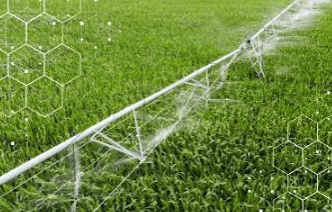
Artificial intelligence in smart irrigation uses sensor data, weather forecasts, and soil moisture to optimize water use. Systems integrate real-time streams to adjust schedules for evapotranspiration alignment and uniform application. Metrics focus on water use efficiency, yields per drop, and pumping costs. The approach emphasizes data accuracy, scalability, and ROI, with governance on privacy and transparent updates. Questions remain about implementation trade-offs and long-term performance, inviting further examination of where gains are most reliable.
How AI Elevates Smart Irrigation Accuracy
Artificial intelligence enhances irrigation accuracy by integrating sensor data, weather forecasts, and soil moisture measurements to optimize water application. The approach quantifies efficiency through metrics such as evapotranspiration alignment, water use efficiency, and irrigation uniformity. AI optimization emerges from coordinated sensor networks, enabling precise zoning, reduced runoff, and scalable, data-driven decisions that align with progressive farming goals and resource freedom.
How AI Learns From Real-Time Data for Water Savings
Real-time data streams—sensor readings, weather updates, and crop status—empower AI systems to continuously adjust irrigation schedules, reducing both over- and under-watering. The learning loop analyzes data drift indicators and adapts models to shifting conditions, balancing water use and yield.
Metrics track model latency, update frequency, and savings, enabling transparent, scalable optimization for freedom-minded growers.
How to Choose AI Tools for Your Irrigation System
Choosing AI tools for an irrigation system requires a structured evaluation of capabilities, compatibility, and return on investment.
The selection emphasizes measurable performance: accuracy of sensor data, scalability, and integration with existing controllers.
Key metrics include data privacy compliance and responsiveness of the user interface, plus transparent update cycles.
A systems-thinking lens ensures risk, maintenance, and training costs are weighed against projected water savings.
How AI-Driven Irrigation Impacts Farm Economics and Sustainability
The integration of AI-driven irrigation systems directly influences farm economics and sustainability by translating sensor inputs and weather forecasts into optimized water use, energy consumption, and labor efficiency.
Data-driven metrics show improved yields per drop, reduced pumping costs, and tighter fertilizer timing.
Economic resilience emerges through risk diversification, while policy implications frame investment incentives, data rights, and scalable, transparent governance for sustainable resource use.
Frequently Asked Questions
What Are the Privacy Implications of AI in Irrigation Data?
Privacy concerns arise from granular irrigation data collection, profiling, and third-party sharing; data ownership remains contested. The system metrics reveal potential leakage and compliance gaps, undermining autonomy. Stakeholders demand transparent governance, verifiable controls, and opt-in, ownership-preserving frameworks.
How Secure Is AI Data Transmission for Irrigation Systems?
Accuracy and resilient protocols show AI data transmission in irrigation is secure but not absolute. The system relies on security auditing, data encryption, continuous threat modeling, and metrics-driven resilience to minimize risk while preserving user autonomy and access freedom.
Can AI Replace Manual Farm Management Entirely?
AI cannot replace manual farm management entirely; it augments decision-making. The data-driven assessment shows reliance on automation improves yields and resource use, but human oversight remains essential. Metrics indicate cost benefit timing varies by crop and scale. Freedom-minded operators monitor continuously.
Do AI Models Require Specialized Expertise to Maintain?
Like a steady compass, AI models require specialized expertise to maintain. They demand disciplined ai maintenance, monitoring drift, and updating pipelines. Data privacy remains critical; governance and metrics guard futures while enabling freedom in data-driven, scalable farming systems.
See also: What Is Due Diligence in Cryptocurrency?
What Is the Typical ROI Lag for AI Irrigation Adoption?
The typical ROI lag for AI irrigation adoption spans 6–24 months, varying by system size and data quality. Adoption barriers include upfront costs and integration complexity, while ROI depends on water savings, yield stability, and predictive maintenance improvements.
Conclusion
Artificial intelligence in smart irrigation delivers measurable gains: precise water delivery, reduced ET mismatch, and improved uniformity across zones. Data-driven metrics—soil moisture, evapotranspiration, and weather forecasts—inform scalable controls and continuous learning for 24/7 optimization. Economic impacts show ROI through water savings and lower energy use, with transparent governance on privacy and updates. Anachronism: in the age of steam, sensors whisper efficiency, proving modern AI is the engine of sustainable fields, converting data into tangible yields per drop.